Montana weather certainly doesn’t always stick with the respective elements of the traditional four season calendar. Nevertheless, Summer Solstice is set to usher in (mostly) everyone’s favorite time of year, falling on Wednesday, June 21st at 12:24AM/EDT.
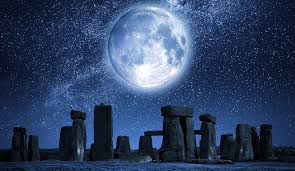
This of course means Bozemanites will be able to celebrate a few hours earlier with the time change. But before the summer festivities begin, here’s a little background on the annual June solstice from our friends at The Old Farmer’s Almanac. What is the Summer Solstice? The word ‘solstice’ is from the Latin solstitium, from sol (sun) and stitium (to stop), reflecting the fact that the Sun appears to stop at this time (and again at the winter solstice). The timing of the solstice depends on when the Sun reaches its northernmost point from the equator.
In temperate regions, we notice that the Sun is higher in the sky throughout the day, and its rays strike Earth at a more direct angle, causing the efficient warming we call summer. This summer solstice is the day with the most hours of sunlight during the whole year. Sunrise hits at 5:34AM on June 21st, giving the people of Bozeman sunshine for 15 hours and 17 minutes prior to sunset at 9:17PM. At the winter solstice, just the opposite occurs: The Sun is at its southernmost point and is low in the sky. Its rays hit the Northern Hemisphere at an oblique angle, creating the feeble winter sunlight. So why doesn’t the Summer Solstice fall on the same date each year? The summer solstice in the Northern Hemisphere ranges in date from June 20th–22nd. This occurs in part because of the difference between the Gregorian calendar system, which normally has 365 days, and the tropical year (how long it takes Earth to orbit the Sun once), which has about 365.242199 days. To compensate for the missing fraction of days, the Gregorian calendar adds a leap day about every 4 years, which makes the date for summer jump backward.
However, the date also changes because of other influences, such as the gravitational pull from the Moon and planets, as well as the slight wobble in Earth’s rotation. Learn more about the Summer Solstice and order your copy of The Old Farmer’s Almanac at www.almanac.com. •