When did Yellowstone National Park become ecologically whole? Dr. Douglas Smith, the park’s retired Senior Wildlife Biologist, will address this question in the next presentation of Gallatin Valley Friends of the Sciences’ Science Inquiry Series.
Co-sponsored by local nonprofit Hopa Mountain, the next talk of the series is set for Wednesday, April 1st. “A Wildlife History of the Mother Park” will begin at 6:30pm. It will be held in the Community Room at Bozeman Public Library.
In his presentation, Smith will discuss Yellowstone’s ecological rough start, how it developed a new approach to park management, and how wolf restoration and dealing with environment issues have helped to restore ecological balance, as evidenced by the status of wolves, birds, beaver, elk and other iconic Yellowstone wildlife.
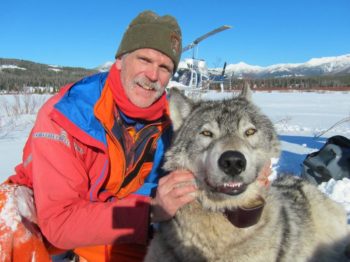
courtesy of Douglas Smith
Smith holds a Ph.D. in Ecology, Evolution and Conservation from the University of Nevada, Reno. He has studied wolves and other wildlife for 45 years, including several wolf studies and supervising the wolf reintroduction program in Yellowstone in 1995. He has also supervised Yellowstone’s bird, elk and beaver programs.
Smith has participated in numerous documentaries about wolves and birds as well as appearing on 60 Minutes and other media. He has published a wide variety of journal articles and book chapters on wildlife, and has authored or co-authored seven popular books including a children’s book released in 2025. Among his many awards is the Distinguished Service Award of the U.S. Department of the Interior.
The presentation will be followed by a Q&A period. The informative talks are presented in person on select Wednesdays. The presentations are free and open to the public, with seating on a first-come, first-served basis.
Find Gallatin Valley Friends of the Sciences on social media or visit www.gallatinscience.org for additional details and information about future talks. The nonprofit was established in 2017 to explore cutting edge science topics, their latest developments, and their relevance to society. •